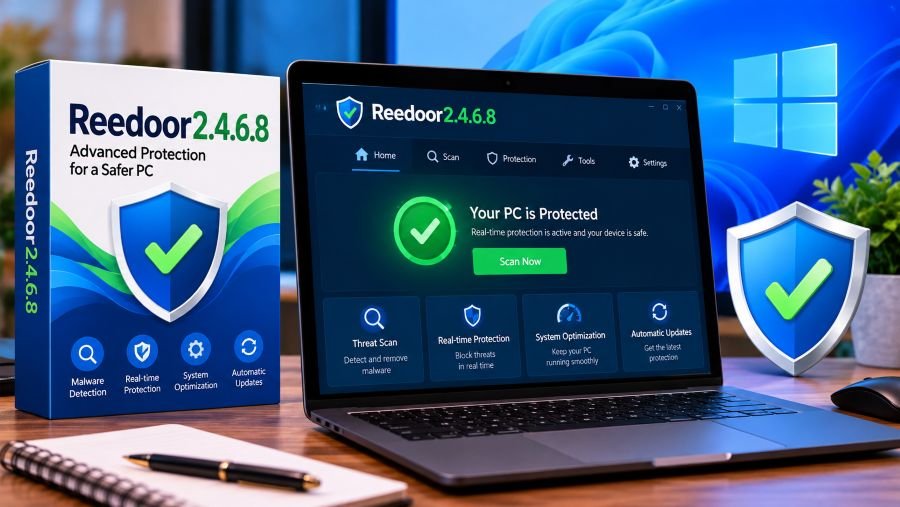
Reedoor2.4.6.8: What Is It, Is It Safe, and How Does It Work?
Introduction
You come across an unfamiliar software name. It looks technical. It has a version number. A few websites even describe it as a useful security tool.
But is it genuine?
Reedoor2.4.6.8 is a term that has appeared in online discussions about Windows software, antivirus protection, and computer errors. Despite those descriptions, there is no reliable public evidence confirming that it belongs to a recognised software developer.
That leaves an important question: should computer users trust it?
The answer requires looking beyond the name. Here is what is known, what remains unconfirmed, and how to protect your computer if you encounter it.
Quick Facts
| Detail | Information |
|---|---|
| Name | Reedoor2.4.6.8 |
| Category | Unverified software-related term |
| Official developer | Not confirmed |
| Official website | Not verified |
| Operating system | Often mentioned alongside Windows |
| Antivirus capabilities | Not independently verified |
| Official download | No trusted source confirmed |
| Security status | Unknown |
| Recommended action | Verify any associated file before opening it |
| Information checked | October 2026 |
What Is This Software Name?
Reedoor2.4.6.8 appears to be an unfamiliar technical name rather than a well-documented computer program.
Several websites discuss it in connection with antivirus protection, software updates, and Windows performance. However, their descriptions vary considerably.
Some present it as a security application. Others discuss it as a system-related error or data-management tool.
There is a problem with these claims.
No clearly established developer, official product manual, or recognised software publisher has been identified for this exact name.
That does not prove that every file using the name is dangerous. It means users should avoid assuming the name represents legitimate software.
A genuine application normally comes with identifiable information, including its publisher, purpose, supported operating systems, and update history.
Those details matter more than an impressive-looking product name.
Why Does the Name Include 2.4.6.8?
The number sequence resembles a software version identifier.
Developers regularly use version numbers to distinguish releases, track updates, and identify changes in their applications.
For example, a software company might release a program with version 2.4 before publishing a later build.
The sequence 2.4.6.8 could resemble that type of release numbering.
However, there is no verified release history connecting these numbers to a legitimate Reedoor product.
A version-style number is not proof of authenticity.
Anyone can attach numbers to a product name, download, or executable file.
Is It a Legitimate Antivirus Program?
Some online articles refer to the term as Antivirus Reedoor2.4.6.8.
They may describe security features such as malware detection, real-time protection, and system scanning.
Unfortunately, these features cannot be independently confirmed for a product with this exact name.
Established antivirus programs usually have publicly identifiable developers and documented security capabilities.
They may also undergo testing by independent organisations.
For this particular name, available information does not establish a recognised antivirus vendor or trustworthy testing history.
For that reason, it should not be treated as a proven security application.
Users looking for reliable protection can use Microsoft Defender Antivirus, which is included with supported modern Windows systems.
Why Might It Appear on Your Computer?
Finding an unfamiliar name does not automatically mean a computer has been infected.
The surrounding situation is far more important.
1. Search Engine Results
You might first encounter the term while searching for unfamiliar applications or technical errors.
Search results can contain articles discussing products that have not been independently verified.
Simply visiting a search results page does not mean the named application exists on your computer.
2. Browser Notifications
Some websites display security warnings that imitate legitimate computer alerts.
These messages may encourage visitors to download an application, purchase protection, or contact a support number.
A warning shown by a website is not the same as a detection issued by Windows Security.
If the name appears in a browser notification, inspect the source before taking action.
3. Downloaded Files
A downloaded file could contain this name.
In that case, the correct approach is to inspect the file itself.
Check its extension, publisher, download source, and digital signature where available.
Do not assume that a file is harmless simply because a website calls it a utility.
4. Windows Error Messages
An unfamiliar technical term may also appear inside an error message.
Errors can be caused by application crashes, missing files, unsuccessful updates, or other software problems.
The appearance of a name does not establish the cause.
Identify the application generating the message before attempting repairs.
Is It Safe or Dangerous?
Its safety cannot be determined from the name alone.
There is no reliable evidence establishing Reedoor2.4.6.8 as a recognised malware family. Equally, there is insufficient evidence to recommend it as a trustworthy application.
The distinction is important.
Unknown software is not automatically malware, but unknown software should not be trusted without verification.
If you encounter a suspicious file, pay attention to its behaviour.
Warning signs may include:
- Requests to disable antivirus protection.
- Unexpected demands for administrator permissions.
- Download links from unfamiliar websites.
- Repeated pop-ups requesting payment.
- Claims that your computer is infected without evidence from a trusted security application.
- Unexpected installation of additional programs.
These behaviours can indicate unwanted or harmful software, although none proves that this particular name is malicious.
How to Check an Unknown Program on Windows
Windows provides several built-in tools that can help you investigate suspicious applications.
Step 1: Open Task Manager
Press Ctrl + Shift + Esc to open Task Manager.
Check the Processes and Details sections.
Look for unfamiliar entries, especially those consuming unusual amounts of system resources.
However, high CPU or memory usage alone does not prove malicious activity.
Step 2: Examine the File Location
If a suspicious process appears, right-click it and select Open file location.
Check where the executable is stored.
You can also open its Properties window to look for publisher information and a digital signature.
An unfamiliar location or missing signature deserves further investigation, although it does not automatically confirm malware.
Step 3: Scan the File
Right-click the suspicious file and choose the Microsoft Defender scanning option.
On some versions of Windows 11, you may first need to select Show more options.
Allow the scan to finish.
Follow the recommendations provided by Windows Security if it detects a threat.
Step 4: Run a Full System Scan
Open Windows Security and select Virus & threat protection.
Choose Scan options, then Full scan.
This checks files and programs across your computer rather than scanning only one selected item.
A full scan is useful when you suspect an unwanted application has been installed.
Step 5: Review Protection History
Open Windows Security and select Protection history.
This section provides information about detections and actions taken by Microsoft Defender.
If a threat has been quarantined, review the details before deciding what to do next.
Do not allow an unknown flagged file simply to make a warning disappear.
What Should You Do If It Is Installed?
If you discover an installed application using this name, avoid opening it until you have checked its origin.
Start by inspecting its publisher and installation information.
Then scan the relevant files using trusted security software.
If the application is unwanted or identified as harmful, follow your antivirus program’s recommendations.
For a normal unwanted application, Windows provides an uninstall option through:
Settings → Apps → Installed apps → Uninstall
If security software identifies malware, address the detection first rather than relying only on the standard uninstall process.
For persistent threats, Microsoft also provides Defender Offline scanning.
This scan restarts the computer and checks for threats outside the normal running Windows environment.
Save any open work before using it.
What About Downloading It?
There is no verified official download source for this exact product name in the public information reviewed.
That makes downloading files advertised under the name a poor choice.
Before installing any unfamiliar program, confirm that it comes from an established publisher.
Check the developer’s official website, product documentation, and download instructions.
Be particularly cautious when a website advertises a free security tool while simultaneously claiming your device is infected.
Legitimate security software should not require you to trust an unknown download link.
How to Protect Your Computer From Unverified Applications
Most users can reduce their exposure to unwanted software by following a few straightforward habits.
Keep your operating system updated. Security updates help address weaknesses that attackers might otherwise exploit.
Use trustworthy download sources. Official developer websites and recognised app stores are safer starting points than unknown download portals.
Keep antivirus protection active. Microsoft Defender and other established security applications can detect many known threats.
Review installation permissions. Unexpected requests for administrator access or disabled security controls deserve attention.
Back up important files. Regular backups help reduce potential data loss if malware, hardware failure, or other problems occur.
These precautions apply to any unfamiliar application, not only this name.
Why Do Different Websites Give Different Explanations?
Search results about unfamiliar technical terms can be confusing.
One website might describe a security program. Another might present a repair tool. A third may discuss an error code.
When these descriptions lack official documentation, their reliability becomes difficult to judge.
The safest approach is to separate verified information from unsupported claims.
A detailed feature list does not establish that an application exists.
Neither does a professional-looking logo, numerical version identifier, or supposed download button.
Readers should look for evidence from the actual software publisher or a reputable independent security organisation.
Until that evidence is available, descriptions of Reedoor2.4.6.8 should be treated cautiously.
Frequently Asked Questions
1. What is Reedoor2.4.6.8?
It is an unfamiliar software-related term appearing in online articles and Windows security discussions. Its exact origin and purpose have not been reliably established.
2. Is it a virus?
There is no reliable evidence confirming that the name identifies a specific virus. If you encounter a file using it, scan the actual file with trusted security software.
3. Is it an official Microsoft application?
No verified Microsoft documentation identifies it as an official Windows application or component.
4. Can I download it for Windows 11?
There is no confirmed official download source. Avoid installing unfamiliar software from websites that cannot establish the identity of its publisher.
5. Does it improve computer performance?
No verified technical evidence demonstrates performance improvements from an application with this exact name.
Some websites use the name in discussions of security products, suspicious warnings, and unfamiliar software. Those references do not prove that an established antivirus product exists.
7. How can I remove it from my computer?
First determine whether an actual application or file is present. Run a trusted antivirus scan, review the detection results, and uninstall unwanted applications through Windows settings when appropriate.
8. What should I do if a browser displays a warning about it?
Do not immediately click a download link, call an advertised support number, or provide payment details. Close the suspicious page and check your device through Windows Security.
Final Thought
Reedoor2.4.6.8 may look like an ordinary software product, but its identity remains unverified.
There is no confirmed developer, trusted official download, or established technical documentation showing exactly what it does.
That uncertainty should guide your decision.
If you only encountered the name online, there is no reason to assume something is wrong with your computer.
If it appears as a file, running process, or security warning, investigate the source and use recognised Windows security tools to check it.
A software name can look convincing. Trust should come from evidence.