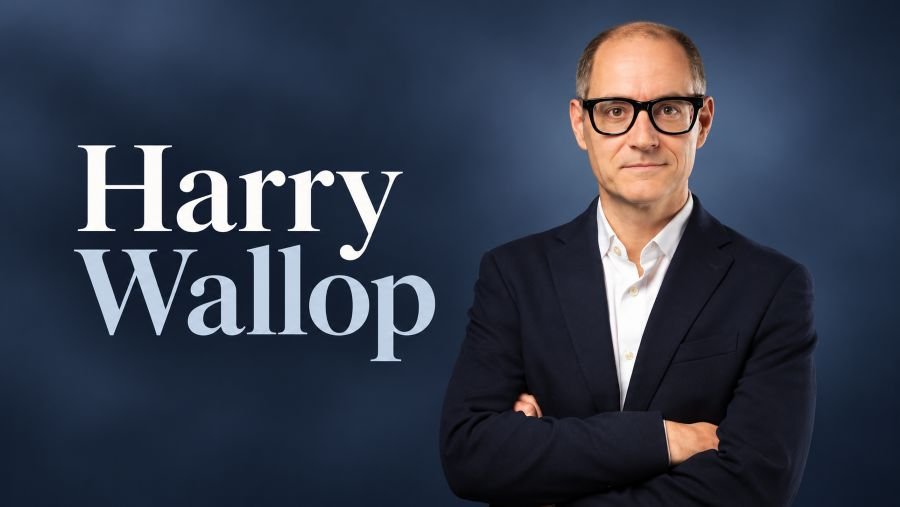
Harry Wallop: The Journalist Who Turns Everyday Spending Into Big Stories
Introduction
Harry Wallop is a British consumer journalist, feature writer, columnist, broadcaster and author. He is especially known for reporting on retail, consumer spending, supermarkets, business and the small money decisions that affect ordinary households.
His work goes beyond newspapers. Wallop has reported for television, written a book about class and consumer habits, and carried out first-hand investigations into businesses people use every day.
Right now, he works as a freelance journalist. He writes a weekly business column for The Times and contributes to other national publications. In June 2026, he won Commentator of the Year at the Headlinemoney Awards for his work with The Times and The Sunday Times.
Quick Facts
| Detail | Information |
|---|---|
| Full name | Harry Wallop |
| Profession | Journalist, columnist, broadcaster and author |
| Main field | Consumer affairs and business journalism |
| Current status | Freelance journalist and broadcaster |
| Current major publication | The Times |
| Education | Modern History, University College, Oxford |
| Former newspaper role | Consumer Affairs Editor at The Daily Telegraph |
| Book | Consumed: How We Buy Class in Modern Britain |
| Book publisher | William Collins |
| Major 2026 award | Headlinemoney Commentator of the Year |
| Television work | Channel 4 and Channel 5 consumer programmes |
Who Is Harry Wallop?
Harry Wallop writes about money in everyday life.
That sounds simple. It isn’t.
A supermarket price rise can tell a bigger business story. A delivery app can raise questions about worker earnings. The success of a pub chain can reveal how British customers spend their money.
That is the kind of territory Wallop covers.
His official professional site describes him as an award-winning consumer journalist, feature writer, columnist and broadcaster. It says he writes regularly for The Times, including a weekly column for the newspaper’s business pages. His work has also appeared in The Sunday Times, Daily Mail, Mail on Sunday, The Guardian, Financial Times and Country Life.
So, basically, his beat is broad.
But there is a clear thread. He looks closely at how companies sell things and how people spend.
Education and Oxford Years
Wallop studied Modern History at University College, Oxford.
University College’s own alumni material lists Harry Wallop as a 1993 Modern History member. The same Oxford source later highlighted one of his journalism awards.
Studying history may seem quite distant from consumer reporting.
Actually, there is a link.
Much of Wallop’s later journalism looks at patterns. He checks how businesses change, how shopping habits shift and why ordinary products can say something bigger about British society.
That idea later became central to his book.
His Early Newspaper Career
Wallop built a large part of his early career at The Daily Telegraph.
In August 2007, The Guardian reported that he had moved from the Telegraph’s City desk to become its consumer affairs correspondent.
The role suited him.
Consumer journalism touches almost everything. Bills matter. Food prices matter. Shops matter.
So do holidays and technology.
Wallop later became the Telegraph’s Consumer Affairs Editor. HarperCollins’ author profile also records his work as a feature writer at the paper and notes his earlier position as its award-winning Consumer Affairs Editor.
He covered stories linked to household costs, shopping, food, personal finance and consumer trends.
He also wrote from a family angle.
His own website says he previously wrote a Telegraph column called “Dad of 4.”
Moving Into Freelance Journalism
Wallop eventually moved away from a permanent Telegraph role and built a freelance career.
That opened up more room.
He could write newspaper investigations, business commentary and long-form features while also working on television.
His most visible regular newspaper work now comes through The Times. His professional website says the Harry Wallop column appears in the Times business pages on Fridays.
A September 2026 Headlinemoney profile described him as a Times business columnist and freelance feature writer. That gives a clear picture of his present professional status.
His stories tend to start with something familiar.
Food delivery. Pubs. Shops. Prices.
Then the business numbers appear.
That approach makes complex money stories easier to understand without turning them into textbook material.
Undercover and First-Hand Reporting
Wallop does not always report from a desk.
Sometimes he joins the story.
In 2024, he worked undercover as a Deliveroo rider while investigating the economics of food-delivery apps. His website says the reporting looked at why riders could end up earning very low amounts for their work.
He took another unusual approach for a feature about Wetherspoons.
Wallop spent 24 hours inside a Birmingham branch and interviewed company founder Sir Tim Martin. The story examined why the pub business attracts loyal customers while also generating plenty of debate.
These assignments show his working method.
Try it. Watch closely.
Then write what happened.
Television Career
Wallop has also developed a substantial television career.
Channel 4 consumer programmes became a major part of his broadcasting work. His verified credits include Dispatches, Superscrimpers, Something for Nothing and the eight-part series Shop Secrets: Tricks of the Trade.
His Dispatches work has included programmes such as Secrets of Sports Direct, Secrets of Poundland and Secrets of Cadbury.
Later films included Did Brexit Work for Business? in 2021 and The Truth About Food Prices in 2023.
Food prices became a natural subject for him.
Consumers see the bill immediately. But behind that bill sit suppliers, retailers, ingredient costs and pricing decisions.
Wallop has spent years reporting on those links.
Channel 5 Work
His television work is not limited to Channel 4.
In 2024, Wallop presented Channel 5’s Supermarket Prices: Are We Being Ripped Off?
He has also contributed to the channel’s Secrets of… programmes, covering businesses including supermarkets and large retailers.
Another regular feature was “Wallop of the Week” on Shop Smart, Save Money, where he gave viewers consumer advice and looked at ways to get better value.
Again, the subject stays familiar.
Spend. Check. Compare.
Then explain the numbers.
His Book Consumed
Wallop’s interest in shopping habits became the basis for a full book.
His title, Consumed: How We Buy Class in Modern Britain, was published in paperback by William Collins on 27 March 2014.
The book looks at consumer choices and social class.
The basic idea is interesting.
People communicate a lot through what they buy. Food, clothes, cars, holidays and household products can carry social signals, even when the buyer does not consciously think about them that way.
For Wallop, shopping is not simply shopping.
It can tell a social story.
That subject fits neatly with the journalism he has produced across newspapers and television.
Major Journalism Awards
Wallop has received several notable professional honours.
University College Oxford records that he won the Foreign Press Association financial/economic story of the year award for 2023. The award recognised a Sunday Times Magazine feature about the banana industry.
Then came another strong result.
At the 2025 UK Press Awards, Wallop was highly commended in the Business and Finance Journalist of the Year category. The official awards results list him as a freelance journalist.
His biggest recent recognition arrived in June 2026.
Wallop won Commentator of the Year at the Headlinemoney Awards. The official result identifies him as freelance and links the winning work to The Times & Sunday Times.
That award matters for another reason.
It confirms his current standing.
He is still actively producing recognised business and consumer journalism.
Why Consumer Journalism Fits Him
Wallop has stayed close to consumer reporting for years.
There is plenty to write about.
Prices change. Companies change.
Customers change too.
A story about a chocolate bar may end up being about inflation. A supermarket loyalty card can become a story about customer data and pricing. A delivery order can raise questions about pay and business costs.
Wallop tends to find the larger story inside the ordinary purchase.
That is his lane.
His newspaper work and television projects repeatedly return to the same question: what is actually happening behind the price people see?
Current Work
As of October 2026, Wallop remains active as a freelance journalist, columnist and broadcaster.
His weekly work for The Times continues to be central to his journalism. Knight Ayton, which represents him for broadcasting, also lists television appearances and consumer programmes among his current professional work.
His subjects can shift.
One week may involve retail.
Another might deal with workplace economics or household bills.
But the writing usually stays rooted in ordinary experience.
That helps explain the longevity of his career.
People keep spending money.
Businesses keep trying to win it.
There is always another story.
What Makes His Reporting Recognisable?
Wallop often puts himself close to the subject.
He tries services. Visits businesses.
He speaks with the people involved.
The finished stories then mix observation with business reporting.
Basically, he makes economics feel physical.
You can see the supermarket shelf. You can picture the delivery rider. You can understand why the pub is busy.
The numbers come after that.
It is a practical writing style, and it works well for subjects that might otherwise feel dry.
Final Thought
Harry Wallop has built his career around a simple subject: how people spend money.
But that subject is huge.
His work has taken him from the Telegraph’s consumer desk to The Times, major newspaper features, Channel 4 investigations, Channel 5 programmes and an award-winning freelance career.
He still writes about everyday things.
That is the point.
A weekly shop, a takeaway delivery or a trip to the pub may look ordinary. Wallop’s reporting checks the business story sitting behind it.
And there usually is one.
Frequently Asked Questions
Who is Harry Wallop?
Harry Wallop is a British consumer journalist, columnist, broadcaster and author. He writes about retail, business, prices, spending and consumer behaviour.
What does Harry Wallop do now?
As of October 2026, he works as a freelance journalist and broadcaster. He writes a weekly business column for The Times.
Does Harry Wallop write for The Times?
Yes. His official website says he writes the Harry Wallop column for The Times business pages on Fridays.
Did Harry Wallop work for The Daily Telegraph?
Yes. He worked at The Daily Telegraph and became its Consumer Affairs Editor. He also worked as a feature writer for the newspaper.
What book did Harry Wallop write?
He wrote Consumed: How We Buy Class in Modern Britain. William Collins published the paperback in March 2014.
What TV programmes has Harry Wallop appeared in?
His verified work includes Channel 4’s Dispatches, Superscrimpers, Something for Nothing and Shop Secrets: Tricks of the Trade. He has also worked on Channel 5 consumer programmes.
Where did Harry Wallop study?
He studied Modern History at University College, Oxford. Oxford’s University College lists him as a 1993 Modern History member.
What award did Harry Wallop win in 2026?
He won Commentator of the Year at the 2026 Headlinemoney Awards for his work associated with The Times & Sunday Times.