Greg Searle: Olympic Gold, a Remarkable Comeback and Life After Rowing
Introduction
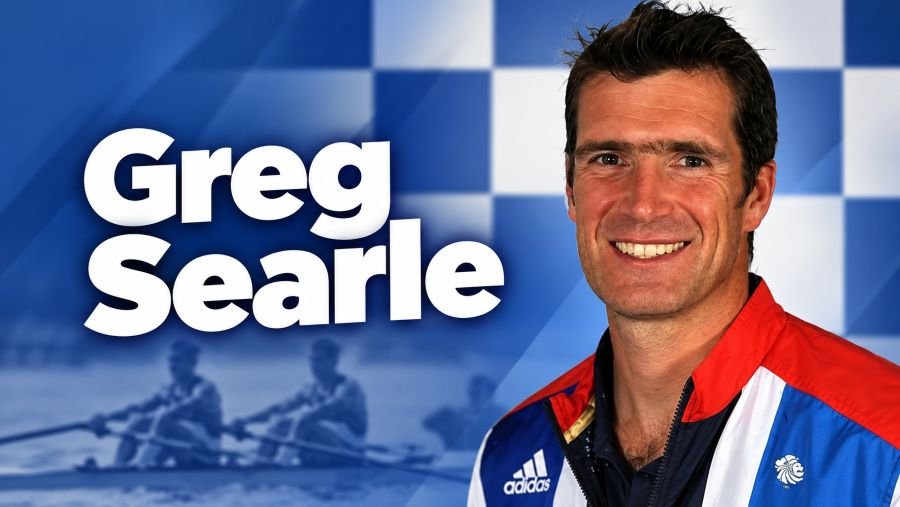
Greg Searle is a British Olympic rowing champion best known for winning gold at the 1992 Barcelona Olympics alongside his brother Jonny Searle and cox Garry Herbert.
His story did not stop there.
He later won bronze at Atlanta 1996, stepped away from international rowing, worked in sailing and business, then returned years later to win another Olympic bronze at London 2012.
That comeback stands out. Big time.
Today, his public work centres on performance coaching, speaking, team development, charity work and his continuing links with rowing.
Quick Facts
| Detail | Information |
|---|---|
| Full Name | Gregory Mark Pascoe Searle |
| Known As | Greg Searle |
| Date of Birth | 20 March 1972 |
| Birthplace | Ashford, England |
| Nationality | British |
| Profession | Former Olympic rower, performance coach, consultant and speaker |
| Olympic Games | 1992, 1996, 2000 and 2012 |
| Olympic Medals | 1 gold and 2 bronze |
| Main Olympic Gold | Barcelona 1992, men’s coxed pair |
| School | Hampton School |
| University | London South Bank University |
| Honour | MBE for services to rowing |
| Book | If Not Now, When? |
| Rowing Association | Molesey Boat Club |
| Charity Work | Access Sport |
| Current Public Work | Coaching, consulting, speaking and rowing-related roles |
Who Is Greg Searle?
Greg Searle is one of the best-known British rowers from the 1990s and early 2010s.
His Olympic record explains why.
He first reached the top of the sport at Barcelona in 1992. He was still in the early part of his senior career, yet he left Spain with an Olympic gold medal.
Twenty years later, he stood on an Olympic podium again.
That gap is striking.
His 2012 bronze came after years away from top-level international rowing, making the later stage of his career very different from the first.
Early Life and Education
Searle attended Hampton School, where rowing became part of his life at a young age.
One major influence was teacher and Olympic rower Martin Cross.
Cross returned to Hampton after winning Olympic gold at Los Angeles 1984. Searle later spoke about how seeing an Olympic champion so close to home made elite rowing feel real and possible.
His older brother Jonny Searle was another strong influence.
Greg started racing internationally while still young. He finished fourth at the 1988 World Junior Championships and later won junior world gold in the coxless four in 1989 and 1990.
The progress came quickly.
He later studied at London South Bank University.
The university lists him among its alumni and awarded him an Honorary Fellowship in 2013.
A reliable public source confirming his exact degree title was not found, so it should not be stated as fact.
The Road to Barcelona 1992
By the start of the 1990s, Searle had moved into senior international rowing.
He was part of the British men’s eight that won bronze at the 1991 World Championships.
Then came Barcelona.
Greg and Jonny Searle raced in the men’s coxed pair with Garry Herbert.
The Olympic final became the race that defined the early part of his career.
Britain was under pressure.
Then came the push.
Herbert’s call of “If not now, when?” became closely linked with the crew’s late charge.
The British boat moved through the field and won Olympic gold.
It was a huge result.
The phrase stayed with Searle for years and later became the title of his book.
World Champion After Olympic Gold
The same trio remained successful after Barcelona.
In 1993, Greg Searle, Jonny Searle and Garry Herbert won the world title in the coxed pair.
He was also appointed an MBE for services to rowing.
The honour appears in the official London Gazette under his full name, Gregory Mark Pascoe Searle.
Atlanta 1996 Olympic Bronze
The men’s coxed pair was no longer part of the Olympic programme, so Searle moved into other boats.
Britain built a strong coxless four.
The crew won bronze at the 1994 World Championships and silver in 1995.
At the 1996 Atlanta Olympics, Searle raced with Jonny Searle, Tim Foster and Rupert Obholzer.
They finished third.
Another Olympic medal.
This time, bronze.
Moving Into Single Sculling
Searle later took on a very different challenge.
He moved into the single scull.
That meant racing alone rather than as part of a multi-person crew.
He won bronze at the 1997 World Rowing Championships.
He also won the Diamond Challenge Sculls at Henley Royal Regatta in 1997 while representing Molesey Boat Club.
It showed his range as a rower.
He could race sweep boats. He could scull too.
Sydney 2000
For the Sydney Olympics, Searle returned to sweep rowing.
He partnered Ed Coode in the men’s coxless pair.
The pair reached the Olympic final and finished fourth.
Before the Games, Searle and Coode had also won the Silver Goblets & Nickalls’ Challenge Cup at Henley Royal Regatta in 2000.
Sydney marked the end of that stage of his international rowing career.
For a while, elite rowing was behind him.
From Rowing to America’s Cup Sailing
After leaving international rowing, Searle tried another sport at a high level.
Sailing.
He joined GBR Challenge, Britain’s America’s Cup programme.
In a direct World Rowing interview, he said he sailed with the team between 2001 and 2003 and worked as a grinder.
It was quite a switch.
Still, the physical demands suited an elite rower.
During his years away from international rowing, he also stayed active. He later said he had completed the London Marathon twice and the London Triathlon twice.
Competitive sport never really disappeared.
The Olympic Comeback
Then London won the right to host the 2012 Olympics.
That changed things.
Searle began thinking seriously about a return.
He eventually came back to international rowing after roughly a decade away and joined the British men’s eight.
The comeback produced results almost straight away.
Britain won World Championship silver in 2010.
They won silver again in 2011.
Suddenly, London 2012 was no longer a distant idea.
He had earned his place.
London 2012 Bronze Medal
At the London Olympics, Searle competed in the British men’s eight.
The crew reached the final.
Britain finished third in 5 minutes 51.18 seconds, taking the bronze medal behind Germany and Canada.
It meant Searle had won Olympic medals 20 years apart.
Barcelona 1992: gold.
London 2012: bronze.
Few sporting careers follow that sort of path.
He announced his retirement from top-level rowing later in 2012.
This time, the competitive chapter really had ended.
Greg Searle’s Olympic Medals
His Olympic medal record includes:
| Olympic Games | Event | Result |
|---|---|---|
| Barcelona 1992 | Men’s Coxed Pair | Gold |
| Atlanta 1996 | Men’s Coxless Four | Bronze |
| London 2012 | Men’s Eight | Bronze |
He also competed at Sydney 2000, finishing fourth in the men’s coxless pair with Ed Coode.
Life After Competitive Rowing
Retirement did not take Searle far from performance work.
He moved into coaching, consulting and public speaking.
His professional work now includes executive speaking, performance coaching and team-development sessions.
He talks about areas he knows from direct experience: pressure, teamwork, personal performance, handling setbacks and working toward demanding targets.
He also spent years working with Lane4 Management Group in leadership development and coaching.
Greg Searle 20:40
His professional platform uses the name Greg Searle 20:40.
The meaning is simple.
He won Olympic gold at 20 and returned to win another Olympic medal at 40.
That gives his coaching work a clear personal base.
He has lived through early success, career changes, time away from elite competition and a late sporting comeback.
Henley Royal Regatta
Searle still has close links with rowing.
As of 2026, Henley Royal Regatta identifies him as an HRR Steward.
He has also been publicly identified as the Regatta’s Sustainability Steward.
His work around Henley has included involvement in environmental projects connected with the River Thames.
So, while he no longer races internationally, he remains connected to the sport that made his name.
Greg Searle Rowing Ltd
Public Companies House records show that Greg Searle Rowing Ltd remains an active UK private company.
The company was incorporated in December 2009.
Gregory Mark Searle is listed as an active director.
Its public filing history provides a reliable record of his business involvement.
Claims about his personal net worth are different.
No strong public financial record gives a verified total figure for his wealth, so speculative net-worth estimates should be avoided.
Family and Personal Life
Searle has spoken publicly about his family.
In a 2012 World Rowing interview, he referred to Jenny as his wife and mentioned their children, Josie and Adam.
British Rowing also referred to Josie and Adam in a 2025 interview.
Because relationship details can change over time, older information should not be presented as proof of someone’s exact current relationship status without a newer direct confirmation.
That distinction matters.
His Brother Jonny Searle
Jonny Searle played a major part in Greg’s rowing story.
The brothers trained and competed together at the highest level.
Their biggest shared achievement came at Barcelona 1992, where they won Olympic gold in the coxed pair alongside Garry Herbert.
They later raced together in Britain’s bronze-medal coxless four at Atlanta 1996.
For both brothers, the 1992 Olympic final remains one of the best-known moments of their rowing careers.
Charity Work
Searle has a long public association with Access Sport.
The charity works to give more young people, including disabled and disadvantaged young people, access to sport.
Access Sport lists him as its Head Ambassador and an Honorary Patron.
He became an Honorary Patron in 2018 and has supported fundraising and organisational work.
If Not Now, When?
Searle published If Not Now, When? in 2012.
The book tells the story around his return to Olympic competition.
The title comes directly from the phrase linked with his 1992 Olympic gold-medal race.
That creates a neat link between two stages of his career.
One race happened when he was young.
The other Olympic story came two decades later.
Why Greg Searle’s Career Still Stands Out
The medal count is impressive.
But the timing tells more.
Searle competed at four Olympic Games: 1992, 1996, 2000 and 2012.
He moved through several rowing events.
He tried America’s Cup sailing.
He built a career away from rowing.
Then he returned.
And won another Olympic medal.
That last part is what makes his sporting record unusual.
Final Thought
Greg Searle’s career did not follow one straight line.
There was early success. Then change.
He won Olympic gold in Barcelona, added another medal in Atlanta, raced in Sydney, stepped away from international rowing and built another working life.
Years later, he came back.
London 2012 brought one more Olympic medal.
Today, his work has shifted from racing boats to helping people and teams handle performance, while his links with British rowing remain clear.
The medals tell one part.
The comeback tells the rest.
Frequently Asked Questions
Who is Greg Searle?
Greg Searle is a British former Olympic rower, performance coach, consultant and speaker. He won Olympic gold at Barcelona 1992.
When was Greg Searle born?
He was born on 20 March 1972 in Ashford, England.
How many Olympic medals did Greg Searle win?
He won three Olympic medals: one gold and two bronze.
When did Greg Searle win Olympic gold?
He won gold at the 1992 Barcelona Olympics in the men’s coxed pair with Jonny Searle and Garry Herbert.
Did Greg Searle compete at London 2012?
Yes. He competed in the British men’s eight and won a bronze medal.
Yes. Jonny Searle is his older brother and was also an Olympic rower.
What book did Greg Searle write?
He wrote If Not Now, When?, published in 2012.
What does Greg Searle do now?
As of 2026, his public professional work includes performance coaching, consulting and speaking. He also remains involved with rowing and Henley Royal Regatta.